
The U.S. GDP number adjusted up, Qatar opens a $35B investment fund in NYC and Larry names China as the cause of global slowing — all topics in this week’s Inside the Economy with SH&J. Larry also touches on the U.S. federal debt, impressive personal savings rates and the potential impact of a government shutdown. He ends his commentary by reminding us, while the markets may appear a little volatile, there is little volume and the trading is trying to generate some more activity. Listen in and share with your family and friends.
Author: sharkeyhowesandjaver
Meet Kay Sinclair
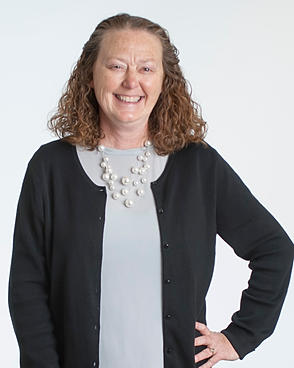
Title: Client Service
SH&J team member since: 2004
You just welcomed your first grandchild into the world, a beautiful baby boy. Congratulations, Grandma! What are you most excited to do with your grandson?
Love him. My husband and I have been so blessed with our sons that we are so looking forward to all the stages of our grandson’s life. I want to cuddle with him, read to him, then play on the floor with him and his toys, bake with him. Pinterest has a whole page on science ideas that I want to try with him, soccer and bicycle riding, I am looking forward to all of it. The only thing I am NOT looking forward to is adolescent boy humor.
Inside the Economy with SH&J: September 14, 2015
This week Larry focuses much of his commentary on the U.S. Looking at new housing starts, the dollar, markets and corporate America, Larry says, “The U.S. economy, compared to everyone else, is doing so much better.” He also shares his perspective on the possibility of a rate increase by the Fed and answers a question from last week about the American banking system. Larry ends with a trip around the world to China, explaining how China’s decline has influenced the currencies of countries that rely on China for trade. Educational and informative as per usual — listen in now!
Medicare: Wading Through the Alphabet Soup
How did Medicare get started? Let’s see how you do on this quiz.
- Which U.S. President signed Medicare as a law? (source)
Answer: Lyndon B. Johnson - How many people signed up for Medicare in 1965, its first year? (source)
Answer: 19 million - Before Medicare was signed into law in 1965, how many revisions had been drafted? (source)
Answer: Approximately 80 revisions, compromises, and alternatives.
With 80 revisions, you can quickly assess how difficult it was to create Medicare from the very beginning. Over time, the Medicare system has not decreased in complexity.
For many people, their 65th birthday is an extra-special celebration because of Medicare enrollment. However, the wrapped gift of Medicare comes with a very confusing tangle of ribbons and bows.
Inside the Economy with SH&J: August 31, 2015
Coming off of a week of some volatility in the markets, Larry addresses many of the concerns investors felt. Touching on the revised U.S. GDP, the S&P 500, and U.S. corporate profits, Larry shows how good the economy here looks. He also delves into the German economy and explains why it’s more important to the U.S. economy than China and wraps up with a prediction for the 2016 election. An educational week this week — encourage your friends and family to listen in!
Happy Labor Day from Sharkey, Howes and Javer!

In observance of the Labor Day holiday, our offices will be closed on Monday, September 7th. We will reopen with regular business hours, 8:30am to 5pm Mon-Fri, on Tuesday, September 8th.
To most of us, Labor Day means the unofficial end of summer, but the history of the holiday has a deeper significance. Please join us in reading and sharing the following details about how Labor Day became the national holiday it is today.
The 411 on 529 Plans: Taking Saving for College to the Next Level

Having children creates a host of concerns, the least of which is how to save money for college. On top of paying for sports equipment, piano lessons and karate classes, parents’ thoughts soon turn to paying for tuition, books and housing. But a little early planning can help mitigate a lot of worrying down the road, and a lot of people find that a 529 College Savings Plan is a good solution.
What is a 529 Plan?
Developed in 1996, 529 plans were designed to help families save money for higher education without paying taxes on the investment. As such, 529 plans are exempt from federal taxes if the proceeds are used for qualified higher education purposes. Most states, including Colorado, will also allow you to deduct your contributions to the plan for state tax purposes.
Any adult can open a 529 plan account for themselves or for someone else, usually a child or grandchild. Another benefit of such a plan is that anyone, whether they own the account or not, can contribute to the account. So if you open an account for your child, anyone you know can make a contribution directly to the account.
Meet Karlton Childress

Name: Karlton Childress
Title: Shareholder and Certified Financial Planner™
SH&J team member since: September, 2000
What do you find most inspiring about being a financial planner?
What I find most inspiring is having the opportunity to help people fully understand and take control of their financial picture so that they can confidently concentrate on other non-financial aspects of their lives and reach their full potential.
Inside the Economy with SH&J: August 17, 2015
The S&P 500’s possible correction, the surprise of the Yuan’s devaluation and the Fed’s looming decision are all topics covered in this week’s Inside the Economy with SH&J. Larry also touches on the decline in mortgage delinquencies and overall consumer debt, and gives some commentary on student debt. Listen in and get up to speed on the U.S. and global economy.
Estate Planning
 There was a time when reducing a very onerous form of taxation was reason enough to endure the complexities and frequent confusion associated with planning one’s estate. Many of the decisions were focused solely on death, and the process frequently sidestepped the more common and important issues like long-term care, mental incapacity and property ownership.
Currently, only estates in excess of $5.43 million are subject to an estate tax and those who are married can have a combined estate of nearly $11 million. Hence, it turns out the estate tax should not be the main motivation for most of us to do estate planning.
 Sharkey, Howes & Javer Blog